NO FLY ZONE

Friday, 26 August 2011

Zenga zenga, dar dar!" ["Alley to alley, house to house."] That was the battle cry of Muammar Gaddafi and his sons

Zenga zenga, dar dar!" ["Alley to alley, house to house."] That was the battle cry of Muammar Gaddafi and his sons when they unleashed their forces on the rebels six months ago. Now the phrase may be coming back to haunt the Gaddafis, if they are, in fact, hiding where the rebels believe they are.

On Thursday, closing in on a string of neighborhoods in central Tripoli, rebels often moved house to house through the narrow streets of Ghabour and Abu Salim — two of Gaddafi's last known strongholds in the Libyan capital. Taking cover behind walls and concrete barricades, groups of fighters from towns across the country dodged sniper fire and waged sporadic gun battles with often invisible assailants as they hunted for the now missing Libyan dictator and his family. "The problem is, we don't know where Gaddafi is," admitted Ali al-Abbas, a Swiss-Libyan dual national at midday. "But we know that a lot of the people who escaped from Bab al-Aziziyah went to Abu Salim. And they've waged significant resistance there. So that's why we think he might be there."

Bab al-Aziziyah is Gaddafi's vast, fortified compound in central Tripoli, which in the past two days has been transformed into ripe territory for both looting and tourism by the sundry forces of the National Transitional Council, the rival of the Gaddafi regime. But the surrounding areas were long ago designed as Gaddafi defensive strongholds, the fighters say. And these streets may be where Tripoli's longest and dirtiest battle plays out — if the worst hasn't already come. "They're very aggressive," says Mohamed, a fighter who was driving out of the neighborhood at sunset, amid fierce shelling. "That means they're fighting for something."
(See pictures of the lengthy battle for Libya.)

The Bab al-Aziziyah compound — massive on its own — was militarily and logistically run from the 77 Base across the street on Airport Road. But it was the adjacent neighborhoods of Abu Salim and Ghabour that Gaddafi used to house his extensive population of staff and supporters. And the ubiquitous green flags of the regime dotting the rooftops there provide the visual reminders — amid the sniper fire — that the battle is far from over.

But there are also signs that a ferocious battle has already been fought. Thursday marked the first day that journalists were able to enter Bab al-Aziziyah Square, a grassy traffic circle in the contested part of town, set between the compound and the 77 Base on one side, and Abu Salim and Ghabour on the other. At midday rebels set fire to a sprawling, ransacked camp that had served as a makeshift supply base and field hospital for Gaddafi loyalists in recent days. The fire, some said, served to mask the stench of decaying flesh.

And indeed, on a median near the circle, nine bloated bodies lay decomposing in the harsh sunlight. A team of ambulance workers said they believed that the bodies had been there for three days while fighting overwhelmed the area.
(See photos of life in Benghazi during wartime.)

But there is strong evidence to suggest that a massacre took place there. A nearby field clinic — also part of the camp — contained more than 30 bodies. Mostly dressed in civilian clothes, they lay swollen and fly-covered, strewn over mattresses and dirt, many of them wearing bandages. Two, still on stretchers and hooked up to IVs inside a clinic tent, had been shot in the head. Another body lay on a stretcher inside an abandoned ambulance. The camp had been ransacked, with food, water bottles and medical supplies strewn about. And several of the other nine on the median had their hands bound in plastic ties behind their backs; the bullet wounds piercing their skulls, backs and chests.

The rebels say Gaddafi's forces did it. But it is still unclear why Gaddafi would have massacred the wounded at his own camp. The bodies had yet to be removed on Thursday, despite the presence of rebels in the area — the kind of treatment that Libyan rebels have typically only permitted for enemy dead. The antiregime fighters are adamant, however. "It was because they didn't like Gaddafi. So people inside the camp killed them — Gaddafi guys," says Mohanid Gomaa, 28, a fighter from Tripoli. "I live here. I saw everything," he adds.
(See a video on the mental toll of Libya's war.)

Still, the scene could pose serious new questions about Libya's future — and its new leadership's commitment to democracy and human rights — as the rebels move to consolidate control of the capital. By Thursday evening, anti-Gaddafi fighters were manning checkpoints — in some places, every 100 m — throughout large swathes of Tripoli. In Souk al-Jomaa, one of the first neighborhoods to fall over the weekend, a number of shops had reopened and children played in the street. And in Green Square, where Gaddafi had famously gathered his supporters for dramatic demonstrations in recent months, families and rebels in cars paraded around the traffic circle producing an endless cacophony of celebratory honking and gunfire.

By sunset, fierce fighting continued to wrack Abu Salim, where piles of soldiers' boots and dried pools of blood marked the remnants of the regime still lurking nearby. The rebels had begun to arrest residents suspected of being Gaddafi loyalists. Meanwhile, rumors spread that Saif al-Islam Gaddafi, the colonel's favorite son and heir apparent, was cornered in a house there. It was not determined whether Saif — who the NTC had earlier incorrectly reported was in its custody — was, in fact, in the house. But trucks of fighters took turns shelling the building with just about every weapon they could find — mortars, rocket-propelled grenades and bullets in all sizes. Whoever was in the house shot back — until nightfall, when it grew quiet and it was time for everyone to break the day's Ramadan fast. At that point, the rebels pulled back 
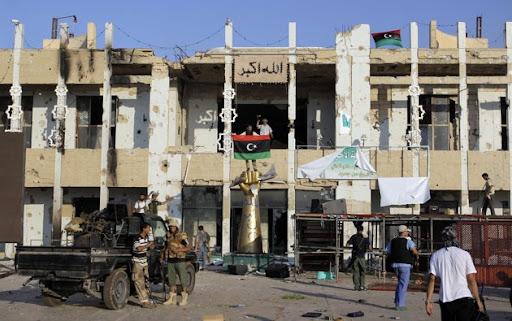
Tripoli locals uncovering Gaddafi's mythical underworld

BENEATH the grassy courtyard of Muammar Gaddafi's compound, long tunnels connect bunkers, command centres and spiral staircases that lead to a luxurious home.
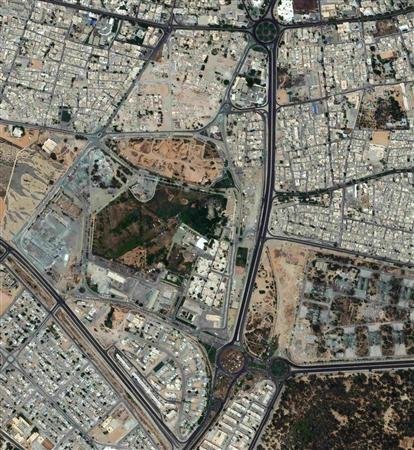
When rebels took over the Tripoli compound on Wednesday, they discovered this long-rumoured underground network.

Outsiders had never seen the tunnels beneath the Bab al-Aziziya compound. Many Libyans assume the passages connect all of Tripoli --which they say explains Gaddafi's ability to appear for speeches in places where no one saw him arrive.

Some guess he fled the city through the tunnels, although because of damage from NATO bombing, it was impossible to determine whether the tunnels extend outside of Bab al-Aziziya.

The compound had always been a mystery to most Libyans. Although it is one of the city's largest landmarks, no streets signs indicate where it is.

Few ever entered, and many Tripoli residents refused to walk nearby, fearing guards on the compound's high green walls would arrest or shoot them.


"There's a Tripoli above ground and a Tripoli underground," said rebel fighter Ismail Dola, 26, exploring the tunnels with friends.

The tunnels are high enough for a tall person to stand upright and wide enough so two people can walk comfortably abreast.

Their walls are 30cm-thick concrete, with heavy metal doors dividing tunnels into sections.

Gas masks are placed throughout the complex, along with water, cola, biscuits and tuna. Refrigerators stand in corners.

The tunnels lead to an array of rooms. Some are sleeping quarters with double beds, small refrigerators and dressers, perhaps meant for guards. Others appear to be blast bunkers, with thicker walls and small metal hatches.

In one tunnel lies the ruins of a smashed white and green golf cart -- the kind Gaddafi often drove.

In places, the tunnels open into multi-room complexes. One lies under Gaddafi's former residence.

Doors at the top of curving, tiled stairways to the house have been bricked shut. Nearby is a broken lift.

One area on the compound's edge, reduced to rubble by NATO bombs, has rooms full of TVs and at least three escape ramps leading to the street.

Another section has bunk beds, a full sitting room, a bathroom, kitchen and an office full of video production equipment.

Brazilian plastic surgeon Liacyr Ribeiro, who operated on Gaddafi for under-eye bags, recounted his rare visit to the bunker. Dr Ribeiro, 70, was at a medical conference in Tripoli in 1994 when Libya's then health minister asked him to "examine someone dear to me".

"I thought it was his wife," he said from Rio De Janeiro. "When we arrived, I realised it was Gaddafi. The entrance of the bunker was a zigzag shape, and they made me wait in the library."

Then they lead Dr Ribeiro to a building "where there was a tent".

"It was there that Gaddafi greeted me," he said. "I told him it was too dark to examine him there, and he took me into a very modern dental office. It was amazing. I did not at all expect to see such a thing," he added of the bunker, where he said there was a gym with an Olympic-sized pool, which had yet to be found.

"At the time Gaddafi was in very good physical form," said Dr Ribeiro, adding that he returned in 1995 to perform a hair implant.


Fierce battles erupt near Gadhafi Tripoli compound

intense battle has erupted between about 1,000 rebels surrounding two buildings filled with Moammar Gadhafi loyalists in the neighborhood next to the Libyan leader's captured compound.
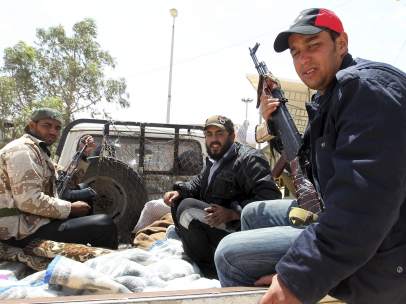
Associated Press reporters on the scene Thursday said rebels were hammering the buildings with heavy gunfire and a huge explosion from the battle scene sent a large plume of white smoke.

Mahmoud Bakoush, a rebel commander at the site, says there are rumors that one of Gadhafi's sons might be in the buildings, but they are unconfirmed.


Libyan rebels said they were sending in special forces units in their hunt for fugitive strongman Muammar Gaddafi,

Libyan rebels said they were sending in special forces units in their hunt for fugitive strongman Muammar Gaddafi, whose supporters are now pinned down in pockets of resistance in the capital, Tripoli.
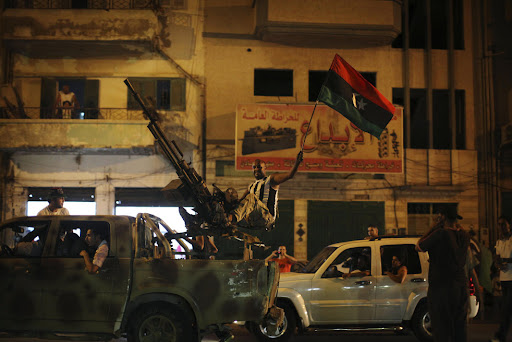
The rebel leadership announced it was planning to move from the eastern city of Benghazi, where the revolution to topple Gaddafi began six months ago, to govern the country from Tripoli.

Rumours of Gaddafi or his sons being cornered or sighted, swirled among excitable rebel fighters engaged in heavy machinegun and rocket exchanges. But even after his compound was overrun on Tuesday, hopes of a swift end to the war were still being frustrated by fierce rearguard actions.

The rebels' Colonel Hisham Buhagiar said they were targeting several areas to find Gaddafi: "We are sending special forces every day to hunt down Gaddafi. We have one unit that does intelligence and other units that hunt him down."

COLONEL Gaddafi yesterday called on women and children to help fight a desperate rearguard against rebels seizing the Libyan capital Tripoli


More than 1,000 fighters trying to find the fallen dictator besieged an apartment in the centre of the city in the belief he was holed up inside with his sons.
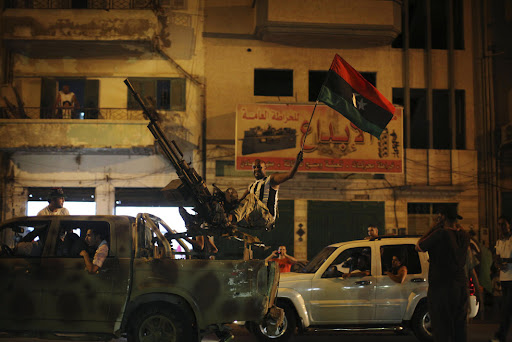
He was nowhere to be seen but spoke via a broadcast on Syrian television urging women and children among his supporters to take up arms.

Advertisement >>

The tyrant declared: “Bring out the men and women this time to purify Tripoli. Bring out the young to protect all alleyways and districts. They must fight and not give up.”

He urged the young to fight “street by street, alleyway by alleyway, house by house” and said women could fight “from inside their homes”.

Witnesses said Gaddafi loyalists were holding back the rebel attackers from several buildings in Tripoli’s Abu Salim district. Locals said sewers in the area ran with blood and the bodies of several regime soldiers lay on the ground.

Regime snipers have also been picking off locals, apparently under instructions of Gaddafi’s commanders.

The Tripoli battleground became a mass of confusion with claims rebel fighters had been shot by their own side in their enthusiasm to kill the fugitive despot.

Loyalist gunmen close to the rebel-held former Gaddafi compound Bab Aziziya also fiercely fought back with assault rifles.

The battle raged after a night of relative calm following the storming of the two-mile square complex on Wednesday.

And dozens of foreign journalists held by Gaddafi’s armed supporters at the Rixos hotel for six days were released.

But in the centre of the capital there was evidence of mass executions of political activists by his forces a few days ago as rebels closed in.

Yesterday hundreds of rebels also advanced on his hometown of Sirte, east of Tripoli, for a final battle against Gaddafi diehards.

But more than 1,000 heavily armed Gaddafi men guarded the outskirts of the coastal town as reinforcements flooded the area.

The only other major city where his forces are still in control is the desert stronghold of Sabha, 400 miles to the south of the capital.

Conflicting rumours continued to spread about the 69-year-old’s whereabouts.

And there were no signs as to when or where his TV message was recorded.

Nato jets, including RAF Tornados, carried out air strikes on loyalist positions in Tripoli and on the outskirts of Sirte. And a farm building in southern Tripoli, which had been rumoured to be where Gaddafi was hiding, was destroyed in an RAF attack.

British special forces troops are now on the ground helping in the search for Gaddafi, who has a £1million “dead or alive” bounty on his head.

As well as the SAS, our most secretive military unit the Special Reconnaissance Regiment is in Libya trying find him.

The SRR is a spin-off of 14 Intelligence Company who honed their close observation skills in Northern Ireland.

A military insider said: “British special forces are watching entry and exit points of places of interest with the whereabouts of Gaddafi very much in mind.

“Gaddafi’s continued liberty is proving to be very costly in terms of the lives of both sides and in terms of the Nato and rebel effort to get rid of him. His death or capture is what is needed so that Libya can begin the road to recovery.”

However, despite the Daily Mirror confirming through sources that special forces are in Libya, British Defence Secretary Dr Liam Fox insisted there would be “no boots on the ground” in the country.

He said: “We never comment about special forces, not least because if we were to use them under those circumstances it would compromise their security.”

The National Transitional Council last night formally moved to Tripoli, in a clear sign they now have political control.

Thursday, 25 August 2011

Intense battles raged Thursday between about 1,000 rebels surrounding 10 buildings filled with Moammar Gadhafi loyalists in the neighborhood next to the Libyan leader’s captured compound

Intense battles raged Thursday between about 1,000 rebels surrounding 10 buildings filled with Moammar Gadhafi loyalists in the neighborhood next to the Libyan leader’s captured compound. Gadhafi, in a new audio message, called on Libyans to destroy the rebels.

A regime spokesman told The Associated Press Gadhafi is safely in hiding and leading the battle against the rebels.

AP reporters on the scene of the battle in the Abu Salim neighborhood said rebels were hammering at least 10 buildings sheltering Gadhafi loyalists with anti-aircraft guns. There were huge explosions, and the air was clogged with smoke. At least three of the buildings were burning.

“They are holding at least 10 tall buildings. They have heavy weaponry, maybe even a tank,” Mohammed Karami, a rebel involved in the battle, said of the Gadhafi loyalists.

Mahmoud Bakoush, a rebel commander at the site, said there were rumors that one of Gadhafi’s sons might be in the buildings, but they are unconfirmed.

“Don’t leave Tripoli for the rats. Fight them, fight them, and kill them,” Gadhafi said in audio message broadcast on Al-Arabiya television. “It is the time for martyrdom or victory,” he said, calling tribes outside the capital “to continue their march to Tripoli.” He said imams in mosques should call for youths to rise up “for jihad.”

He warned that the rebels will enter people’s homes and rape their women.

“They will enter your houses and deprive you of your honor,” he said. “NATO can’t remain in the air all the time.”

Gadhafi spokesman Moussa Ibrahim, in a call to AP’s Cairo office, said the longtime dictator was in Libya and his morale was high. Gadhafi “is indeed leading the battle for our freedom and independence” said Ibrahim, who was recognizable by his voice.

Ibrahim refused to say where Gadhafi was hiding. Ibrahim, who had for months appeared daily in televised news conferences since the start of the rebellion six months ago, added he himself was in an undisclosed location in Libya and constantly on the move.

“All of the leader’s family are fine,” Ibrahim said, adding that top military and political aides remained with Gadhafi.

He said Gadhafi was capable of continuing resistance for “weeks, months and years.”

Ibrahim claimed Gadhafi’s forces controlled a “good portion” of the capital — a claim that contradicts what reporters are seeing on the ground — and other cities and towns. He also accused NATO of besieging Gadhafi strongholds such as Sirte.

Moammar Gadhafi loyalists who had been holding journalists in Tripoli's Rixos Hotel for five days "essentially just capitulated

Moammar Gadhafi loyalists who had been holding journalists in Tripoli's Rixos Hotel for five days "essentially just capitulated" upon realizing that most of the rest of the city had fallen to rebels, CNN's Matthew Chance said after his release Wednesday.
Their release ended what some were beginning to fear was a hostage situation for the three dozen journalists who had been kept inside the blacked-out hotel as fighters loyal to the National Transitional Council fought their way into the Libyan capital. Chance, a senior international correspondent for CNN, said "the reality slowly dawned" on their guards that Gadhafi's government was collapsing.
"They really believed that Gadhafi was coming back, that he was beating the rebels," Chance said after his release. "That's what the government line has been on this all along."
But as the rebels advanced through the city and overran Gadhafi's Bab al-Aziziya compound on Tuesday, "It became more and more obvious that there was nothing really outside of the hotel that was in Gadhafi's control."
Backstory: Tweeting from the Rixos hotel Backstory: Freed from Rixos hotel CNN negotiated Libya hotel release

Wednesday, the guards handed over their weapons and told the journalists, "We're going to let you go," Chance said. The release was coordinated through the International Committee of the Red Cross, which, along with the BBC, provided cars to drive them out.
CNN producer Jomana Karadsheh said the men who held them "really did not know what the scenes on the streets of Tripoli were like." Shortly before the guards gave up, she said, one guard asked a companion, "You were out there -- tell me, what's really going on? Is it what they are telling us?"
Chance called the experience a "nightmare," saying the journalists wept with relief after their release. The "die-hard Gadhafi loyalists" who held them thought they were NATO spies, he said. On Tuesday, one shouted "I suppose you're happy now that they're killing Libyans," he said.
The reporters had been bandying about "all kinds of paranoid scenarios" about what would be done to them, like being used as human shields or executed "by some lunatic hard-liner," Chance said. But in the end, all were released unharmed.
"Everybody's been hugging each other," Chance said. "People who have been living cheek-to-jowl for the past five days, sleeping in the corridors, wondering whether we were going to make it -- it's all very emotional," he said.
iReport: Are you in Libya? Share photos
Chance had described on Twitter the process of going free, piling into a car with other journalists, and driving away from the hotel that had become a virtual prison.
"I can see the NTC rebels. We are nearly there!" he wrote, followed a moment later by: "Rixos crisis ends. All journalists are out!"

The release of £1bn of Libyan frozen assets is being held up at the UN by South African opposition.


South Africa's ANC-led government, past beneficiaries of millions of dollars in support from ousted Libyan leader Colonel Gaddafi, is blocking efforts to unfreeze the money.
South African president Jacob Zuma says the Nato backed revolution has undermined the "African Union's efforts and initiatives to handle the situation in Libya".
But critics say his government is now in danger of being spectacularly on the wrong side of history. Britain has described its attitude as disappointing.
African Union efforts to 'handle the situation' have largely been ineffective.
African governments have tolerated Gaddafi's four decades of misrule in return for his patronage of pan-African causes.
Critics are pointing out the irony of a government that was brought to power by civil struggle and foreign support, apparently supporting a dictator deposed by an internationally backed popular revolution.
But ANC politicians have been famously loyal to former supporters. Nelson Mandela once called Chinese leader Li Peng one of his ‘idols’ despite his role in the Tiananmen Square massacre a role which earned him the nickname the 'Butcher of Beijing.'
South Africa is thought to be consulting with its African Union partners before considering its next move. British and American diplomats have been trying for days to persuade South Africa to shift its position.
Diplomatic sources tell Sky US diplomats will put the issue to a vote in the security council by four pm this afternoon if South Africa continues its opposition.
Such a vote will in all likelihood approve releasing the assets, but the process would say sources set a precedent unhelpful to future efforts to unfreeze urgently needed Libyan assets.

Destroy rebels, demands defiant Gaddafi


Muammar Gaddafi has called on Libyans to "destroy" the rebels who have overtaken Tripoli and forced his regime into hiding.
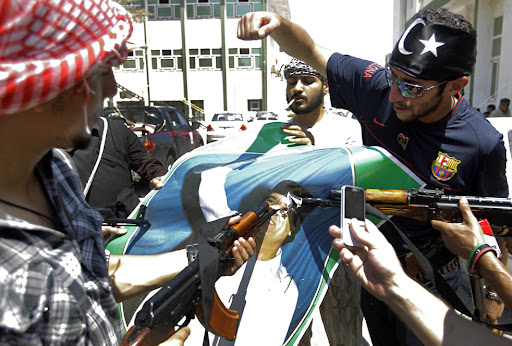
The appeal comes as intense fighting has erupted in the Libyan capital.


The toppled dictator leader made the plea today in a brief audio statement broadcast on Al-Arabiya and other Arab stations.

Fierce fighting broke out between about 1,000 rebels surrounding two buildings filled with Gaddafi loyalists in the neighbourhood next to the Libyan leader's captured compound.

Reporters on the scene said rebels were hammering the buildings with heavy gunfire and a huge explosion from the battle scene sent a large plume of white smoke.

A regime spokesman told The Associated Press Gadhafi is safely in hiding and leading the battle against the rebels.

AP reporters on the scene of the battle in the Abu Salim neighborhood said rebels were hammering at least 10 buildings sheltering Gadhafi loyalists with anti-aircraft guns. There were huge explosions, and the air was clogged with smoke. At least three of the buildings were burning.

"They are holding at least 10 tall buildings. They have heavy weaponry, maybe even a tank," Mohammed Karami, a rebel involved in the battle, said of the Gadhafi loyalists.

Mahmoud Bakoush, a rebel commander at the site, said there were rumors that one of Gaddafi's sons might be in the buildings, but they are unconfirmed.

Gaddafi spokesman Moussa Ibrahim, in a call to AP's Cairo office, said the longtime dictator was in Libya and his morale was high. Gaddafi "is indeed leading the battle for our freedom and independence" said Ibrahim, who was recognizable by his voice.

Ibrahim refused to say where Gaddafi was hiding. Ibrahim, who had for months appeared daily in televised news conferences since the start of the rebellion six months ago, added he himself was in an undisclosed location in Libya and constantly on the move.

"All of the leader's family are fine," Ibrahim said, adding that top military and political aides remained with Gaddafi.

He said Gaddafi was capable of continuing resistance for "weeks, months and years."

Ibrahim claimed Gaddafi's forces controlled a "good portion" of the capital — a claim that contradicts what reporters are seeing on the ground — and other cities and towns. He also accused Nato of besieging Gaddafi strongholds such as Sirte

Rebels say Gaddafi is cornered

Fighting in central Tripoli has continued - as rebels claim they have besieged a cluster of apartments where they believe Colonel Muammar Gaddafi and some of his sons are hiding.
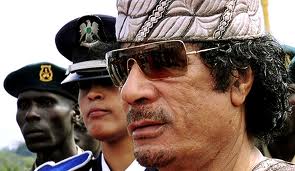
Rebels have been exchanging fire with Col Gaddafi troops inside the buildings, near the central Bab al Aziziyah compound.
A fighter said: "They are together. They are in a small hole. Today we will finish. Today we will end that."
Sky's correspondent Alex Crawford, in Tripoli, said it was apparent some of the fighters had become confused and shot some members of their own side.
"It is total chaos here," she said.
Sky's Stuart Ramsay, also in Tripoli, said he believed the apartment block was near the east side of the compound and was one of a number of similar buildings.
"I have to say, it is not somewhere I would expect him to be holed up in," he said.
Despite the rebels' belief that Col Gaddafi is in Tripoli, there are also suspicions that he may have fled to his hometown of Sirte, which is 250 miles (400km) east of the capital.
The battle for Tripoli has intensified in recent hours, with reinforcement fighters streaming into the capital from the cities of Misratah and Benghazi, as well as the western Nafusa mountains.


Wednesday, 24 August 2011

journalists trapped in Tripoli's Rixos hotel Pro-Gaddafi gunmen bar more than 30 foreigners from leaving

Conditions have deteriorated sharply at the Rixos hotel in the Libyan capital, Tripoli, where more than 30 foreign journalists are trapped by fighting in the surrounding streets.

The BBC's Matthew Price gave a graphic account of life inside the five-star hotel close to Muammar Gaddafi's compound of Bab al-Aziziya taken by rebels on Tuesday, describing it as "the siege of the Rixos".

"It's a desperate situation," Price told Radio 4's Today programme. "The situation deteriorated massively overnight when it became clear we were unable to leave the hotel of our own free will … Gunmen were roaming around the corridors … Snipers were on the roof."

The 35 foreigners at the hotel are mainly British and American journalists from the BBC, Sky, CNN, Fox, Reuters, Associated Press and Chinese television. Price said a US congressmen and an Indian parliamentarian were among the group.

A cameraman who tried to leave the hotel compound "had an AK47 pulled on him", said Price. "It's impossible to get past the guards but also impossible to know what is in the streets beyond the hotel."

There had been gunfire, mortar fire and RPGs launched around the hotel. Morale among the group was sinking. There was "a huge amount of apprehension and nervousness among the journalists stuck in this hotel. It's desperately hard to see how we get out at this stage."

He added: "It's getting pretty miserable here and you can only imagine the sort of tension which the journalists find themselves feeling at the moment."

Supplies of food and drinking water were running low, and parts of the hotel were without power.

Matthew Chance of CNN tweeted on Wednesday morning: "Woke early, gunman in #rixos lobby gone. Still forces on perimeter."

A store had been smashed open by gunmen overnight, he reported. "Journalists told to help themselves. I had a Mars bar for breakfast."

Earlier he tweeted: "Hoping this nightmare will end in a fizzle – not a bang."

In a dispatch filed on Tuesday, Dario Lopez-Mills of the Associated Press wrote that fighting around the hotel had intensified.

"The smell of gunpowder hangs in the thick heat, along with sweat and a little fear. When the shooting is most intense, we take refuge in hotel's basement conference rooms.

"Two satellite telephones set up on a balcony were destroyed by gunfire, so we've stopped transmitting our material. We wait and worry the gunmen could turn hostile at any moment.

"There is no power and no running water. On Monday we ate bread and butter. On Tuesday, the cook made french fries. Bottled water is running low.

"We don't know when it's going to end, and we see little of what happens."

Many members of the media corps who have passed through the Rixos in the last six months have feared becoming human shields for the regime in the event of a rebel assault on the capital.

Regime officials have regularly accused western journalists of being spies and passing information to Nato and rebel forces.

The Foreign Office said: "The situation is deeply concerning. We are urgently working with international organisations and the Free Libya Forces to identify the best way to safely move people in the Rixos as soon as is safe to do so. We urge the Gaddafi forces at the Rixos to allow the journalists to leave."


Monday, 22 August 2011

Ship due to pick up Britons from Libya comes under fire

A Maltese ship which was due to rescue foreign nationals - nine of them British - from Tripoli, Libya, came under fire on Sunday and was forced to retreat, the Times of Malta has said.

It said cargo ship Triva I was due leave Tripoli on Sunday morning.

The MoD said HMS Liverpool had towed a Maltese-registered vessel, damaged by hostile fire, to open waters.

On Sunday, Foreign Office Minister Alistair Burt said up to nine Britons had decided to leave on a Maltese ship.

Heavy fighting is taking place in Tripoli around the compound of embattled Libyan leader Col Muammar Gaddafi, after rebels seized control of much of the city.

Jubilant crowds have gathered in central Green Square, previously the scene of nightly pro-Gaddafi demonstrations.

According to the Times of Malta, about 15 Maltese who remained in Tripoli were expecting to board Triva I - which can carry about 60 passengers - on Sunday.

A number of Polish, British and Lebanese nationals were also planning to board the boat at about 09:00 local time. A pregnant Polish woman and her three children and up to nine British nationals were also expected to leave on the vessel, it said.

Reports that the Maltese ship had come under fire first emerged on Sunday, when AFP news agency reported Polish officials as saying it had been forced to retreat to sea after being hit by gunfire.

Migrant help
On Monday, Major General Nick Pope, the chief of the defence staff's communications officer, said: "At sea, HMS Liverpool was conducting surveillance off Tripoli when she sighted a small Maltese-registered vessel which had been damaged by hostile fire while leaving Tripoli port, apparently with evacuees embarked.

"The vessel was under way but her manoeuvrability was impaired. HMS Liverpool passed a line to the vessel and towed her to open waters where she was able to proceed safely.

"Liverpool alerted the Maltese authorities to the vessel's condition, and then was able to return to her duties off the coast."

Meanwhile, the International Organisation for Migration (IOM) said it had dispatched a ship to Tripoli to evacuate migrants.

It said the ship - which has the capacity to carry 300 people - left the eastern city of Benghazi on Monday, and was due to arrive in Tripoli on Tuesday.

More than 5,000 Bangladeshis, Filipinos and Egyptians have asked the migration agency for help to leave the capital, it said.

Those evacuated to Benghazi will taken by road to the Egyptian border at Salloum before they get help to return to their home countries.

Consistent
In February, the government evacuated hundreds of UK citizens on specially chartered flights and HMS Cumberland.

The British embassy in Tripoli has been empty since staff were evacuated earlier in the year.

On Sunday, Mr Burt said: "Our advice to people in Tripoli has been consistent over a lengthy period of time, obviously to take all available opportunities to leave.

"Most of those who are still there have had reasons to stay embedded, many will have had relatives or relations, and have been content to stay in Tripoli."

British forces have been involved in a Nato mission to enforce a no-fly zone over Libya to protect civilians using "all necessary measures" short of a ground invasion since March.


2,200 people have been killed since the Syrian government's crackdown on protesters began in mid-March

2,200 people have been killed since the Syrian government's crackdown on protesters began in mid-March, the United Nations says.

UN High Commissioner for Human Rights Navi Pillay gave the new toll at an emergency session of the UN Human Rights Council.

The UN previously put the number of dead at between 1,900 and 2,000.

Syrian President Bashar al-Assad said on Sunday that his government was in no danger of falling.

And he warned that any foreign military intervention would backfire on those who carry it out.

Navi Pillay opened the session by saying: "The gravity of ongoing violations and brutal attacks against the peaceful protesters in that country demand your continued attention."

She went on: "As of today, over 2,200 people have been killed since mass protests began in mid-March, with more than 350 people reportedly killed across Syria since the beginning of Ramadan.

"The military and security forces continue to employ excessive force, including heavy artillery, to quell peaceful demonstrations and regain control over the residents of various cities."

The meeting of the UN Human Rights Council was called by 24 states, including Jordan, Kuwait, Saudi Arabia and Qatar.

It followed the publication of a report by UN investigators earlier this month which concluded that Syrian security forces were carrying out widespread human rights violations, which could constitute war crimes.

'Mere lies'
The 47-member forum - whose session started late because of microphone problems - is considering a draft resolution that "deplores the continuing indiscriminate attacks on its population" and seeks an immediate stop to "all acts of violence".


President Bashar al-Assad: ''The solution in Syria remains a political one''
The resolution also stresses the need to "urgently dispatch an independent international commission of inquiry... to investigate violations of international human rights law in Syria since July 2011".

Faysal Khabbaz Hamoui, Syria's ambassador to the UN, defended his government and dismissed the allegations as "mere lies".

"Syria has been subjected to and continues to be subjected to an unprecedented misleading campaign carried by a number of countries in order to weaken Syria and to change its political position," he said.

He described the language used in the resolution as "hateful" and urged council members not to support it. "The resolution will only cause the crisis to lengthen and will only cause more instability," he said.

The BBC's Imogen Foulkes in Geneva says that while human rights council decisions carry moral authority, the UN has no power to enforce them.

Real pressure for regime change would have to come from the UN Security Council where at least one permanent member, Russia, remains opposed, our correspondent adds.

UN humanitarian visit
The US ambassador to the UN, Eileen Donahoe, has made it clear that the meeting is about more than simply condemning human rights violations.

"The purpose of today's session is to increase the pressure on the Assad regime, to get Assad to step down, and to allow the Syrian people to move forward," she said.

"President Obama has asked Assad to step down and allow the Syrian people to move towards a peaceful future. It is clear that Assad is isolated, and I think today's session will underscore that point."

But in Sunday's interview, Mr Assad remained defiant.

He said the solution in Syria was a political one, but violence should be dealt with firmly by the security forces, adding that steps were being taken to introduce a multi-party system and elections might be held in February.

But he warned that any attempt by foreign powers to intervene military "will have greater consequences than they can tolerate".

"First, because of Syria's geopolitical location and second because of Syrian capabilities," he said.

His comments came on the same day a UN delegation arrived in Syria to assess humanitarian needs.

The team has been told it can visit all trouble spots, but the BBC's Jim Muir in neighbouring Lebanon says there is some scepticism about how free its movements will be.

Colonel Gaddafi could flee to a country not signed up to the International Criminal Court such as Venezuela or Cuba

The Brother Leader is alive and remains in Libya, one senior government source said. But he added that plans are on the table to spirit him out of the country to allow breathing space for a peace process led by the National Transitional Council which has now claimed control of most of the capital Tripoli.
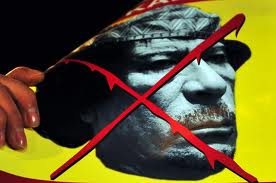
Despite official denials, South Africa will play a key role in negotiations about Gaddafi's fate. It is not only one of most influential countries in the African Union, but its President Jacob Zuma was appointed the AU's chief mediator in the crisis and has visited Col Gaddafi twice since hostilities began in February.
A South African air force plane remains on standby in Tunisia and, the source said, the South Africans are ready to seek safe passage for Gaddafi with the help of neighbouring countries Tunisia or Algeria if he decided to leave.
"We are not going to walk away from this," the source told The Daily Telegraph. "It's larger than the question of Gaddafi the person. It's a question of the unity of the Libyans and the maximum chance being created for that process to happen."
Mate Nkoana-Mashabane, South Africa's foreign minister, has rejected reports that South Africa itself might be a venue for Gaddafi in exile.


Gaddafi vanishes as rebels triumph

Muammar Gaddafi has apparently vanished after Libyan rebels claimed to be in control of most of Tripoli following their lightning advance on the capital.
The international community called on Gaddafi to step down and moved ahead with post-war planning as euphoric residents celebrated in the Green Square, the symbolic heart of the Gaddafi regime.
Colleagues warned he would not go easily, although two of his sons were captured.
"The real moment of victory is when Gaddafi is captured," the head of the opposition's National Transitional Council, Mustafa Abdel-Jalil, said.
A top American diplomat said his whereabouts were unknown, but the US Defence Department believed he was still in the country.
Nato promised to maintain its air campaign until all pro-Gaddafi forces surrender or return to barracks. Nato planes have hit at least 40 targets in and around Tripoli in the past two days - the highest number on a single geographic location since the bombing started more than five months ago.
The rest of the city outside the square, a metropolis of some two million people, was on edge, with most stores closed and large areas appearing lifeless, without even a sign of the thousands of rebels now in the city.
The rapid rebel advance into Tripoli in an hours-long blitz demonstrated the evolution of the opposition fighters who first rose against the regime six months ago, swiftly capturing the eastern part of the vast country but failing to advance westward toward Tripoli even with the help of months of Nato airstrikes.
The rebels' top diplomat in London, Mahmud Nacua, said opposition forces controlled 95% of Tripoli. He vowed "the fighters will turn over every stone to find" Gaddafi and make sure he faced justice.
Gaddafi's former right-hand man, who defected last week to Italy, said the longtime leader would not go easily. "I think it's impossible that he'll surrender," Abdel-Salam Jalloud said, adding that "He doesn't have the courage, like Hitler, to kill himself."


Thursday, 9 June 2011

Algeria and Zimbabwe have sent troops to support Libya's Colonel Muammar Gaddafi in his war against the rebels

Algeria and Zimbabwe have sent troops to support Libya's Colonel Muammar Gaddafi in his war against the rebels according to the daily The International Business Times.
Pondering the reasons for the survival of the Libyan colonel after the severe sanctions imposed against his regime, including the freezing of his assets and the defection of many of his senior officials, the newspaper writes that several reports have confirmed that "soldiers from Algeria and Zimbabwe are actively fighting "on behalf of Gaddafi".

Several media reports focused their coverage on the Libyan rebels and the claims conveyed by the former chief of protocol under Gaddafi that Libya's embattled government has recruited mercenaries from Kenya, Chad, Niger and Mali after losing control of the army, other reports have shown that these mercenaries were a small part of the forces of Gaddafi, the newspaper reported. Citing sources in Harare, the Business Times reported that Zimbabwe has sent over 500 soldiers to support Gaddafi in Libya, its longtime ally.

Other reports have mentioned the involvement of Algeria in the conflict through its support of the colonel, adds the times, noting that the Algerian group of human rights (Algeria Watch / based in Germany) published a report that "the Algerian government provided Gaddafi with material assistance in the form of armed military units." "Algeria Watch also accused the Algerian government of providing aircraft for the transport of mercenaries from Niger, Chad and Darfur to Libya, the times said.

"The use of mercenaries has been used as cover to divert attention and hide the alliances between Libya and other African countries", writes the times, before concluding that Gaddafi could not have survived without a assistance from some neighboring countries.

Reporters Without Borders is dismayed by the one-year jail sentence and fine of 100 euros that a Casablanca court passed today on Rachid Nini, the editor of Al-Massae, one of Morocco's leading newspapers

Reporters Without Borders is dismayed by the one-year jail sentence and fine of 100 euros that a Casablanca court passed today on Rachid Nini, the editor of Al-Massae, one of Morocco's leading newspapers, at the end of a trial marked by judicial intransigence, repeated adjournments and a refusal to free him on bail.

Held since 28 April, the newspaper editor was tried on charges of disinformation and attacking state institutions, public figures and the "security and integrity of the nation and citizens" under articles 263, 264 and 266 of the criminal code.


Nini's lawyer, Khaled Sufiani, said he would appeal. "This is a very bad development for justice and civil liberties in Morocco," he told Reporters Without Borders. "This is a clear warning to journalists, so that they feel threatened when they exercise their freedom of expression."

"We are alarmed to see criminal charges being brought in a press case," Reporters Without Borders said. "This precedent opens the way to many abuses and to the withdrawal of the press law as effective legal tool. We urge the Moroccan courts to reverse this decision."

The press freedom organization added: "Three months after King Mohammed spoke of constitutional reforms in an address, the sentence imposed on Rachid Nini is tantamount to a retraction. Imprisoning a journalist is the mark of authoritarian regimes. No progress towards democracy is possible without respect for media freedom."


Reporters Without Borders wrote to the justice minister on 20 May warning against trying Nini without reference to the press law. If journalists are accused of abusing freedom of expression, "any prosecution should be carried out solely under the provisions of Morocco's press law" and any punishment should be "envisaged by the law, necessary, legitimate and proportionate," the letter said.

Al-Massae journalists told Reporters Without Borders that the prosecution was prompted by articles which criticized corruption, including corruption among close associates of the king, which raised questions about Fouad Ali El-Himma, the head of the Authenticity and Modernity Party, which referred to intelligence chief Abdellatif Hammouchi, and which called for the repeal of the anti-terrorism law.

Wednesday, 8 June 2011

The Syrian ambassador to France, Lamia Shakkour, denied resigning from her post early Wednesday morning and said that she had been the victim of disinformation intended to embarrass Syria.


A woman identifying herself as the Syrian ambassador had announced her resignation by telephone on the French television news channel France 24 on Tuesday evening, citing her disgust at the government’s crackdown against demonstrators in Syria.

Syrian state television and Al Arabiya, a cable channel based in Dubai, United Arab Emirates, later broadcast their own telephone interviews with women identified as Ms. Shakkour, angrily denying the resignation.

She was unavailable for comment Tuesday evening and the Syrian Embassy Web site was taken offline.

But Ms. Shakkour appeared on camera early Wednesday on BFM TV, another French news channel, to deny that she had resigned and attacking France 24 for disinformation.

Standing in front of a Syrian flag and a portrait of the Syrian president, Bashar al-Assad, in the Paris embassy, Ms. Shakkour said that France 24 “is issuing a message in my name. Naturally, I will bring a lawsuit,” she said, “to condemn France 24 for its acts of disinformation, which are part of a campaign of falsification of information and disinformation which began in March 2011 against Syria.”

The television images of her denial ended several hours of confusion after France 24’s report, which had been quickly followed by a strong denial in Syrian media. France 24 insisted that they had called a number that it had used before and that had been provided to them by the Syrian Embassy press office.

It was unclear whether Ms. Shakkour had resigned, been impersonated, or resigned and then changed her mind. She took the ambassador’s post in August 2008 after it had stood vacant for nearly two years amid French-Syrian tensions over the assassination of Rafik Hariri, the former prime minister of Lebanon. Her father had also served as Syria’s ambassador to France, and she is a member of a Christian minority loyal to the Assad government.

The resignation had appeared credible in large part because of its rationale and timing. The woman who called France 24 said she could no longer support the government’s violent suppression of protesters; her statement came after violent clashes in the town of Jisr al-Shoughour that the government portrayed as a massacre by “armed groups” but that residents said was the government’s own answer to a wave of defections from military forces sent to besiege the town.

Syria bars foreign journalists from entering the country, and neither the government’s nor the residents’ accounts of the events could be independently verified. Nevertheless, either version would represent a serious escalation in both the chaos and violence of the Syrian uprising and harsh government efforts to crush it.

France 24 said it was convinced that Ms. Shakkour was the woman who made the resignation statements, in both English and French. Reuters said it had confirmed the resignation by e-mail via the Syrian Embassy’s Web site before it was taken down.

In the telephone statement on France 24, the woman identified as Ms. Shakkour said that she recognized “the legitimacy of the people’s demand for more democracy and freedom” and that she could not “ignore that demonstrators have died, that families live in pain.”

“I can no longer continue to support the cycle of extreme violence against unarmed civilians,” she said.

The Arabic Web site of the Syrian state broadcaster, SANA, said that reports of the resignation were “untrue and false” and part of a “distorting and biased media campaign against Syria.”

The Web site also quoted her as saying: “I greet President Bashar al-Assad and salute Syria, the homeland every Arab citizen carries in his heart. I am deeply disturbed by the false reports on some Arab and foreign satellite channels, part of a distorting and tendentious campaign aiming to achieve one thing: destroy the credibility of this great nation through its children and its young.”

Al Arabiya television broadcast a telephone interview in which someone identified as Ms. Shakkour insisted that she was “still the Syrian ambassador, the ambassador of the Syrian Arab Republic,” and said that she had not talked “to any channel in the world.”

Tunisia Postpones Elections for 3 Months

The interim Tunisian government postponed on Wednesday the first election since the ouster in January of the former dictator Zine al-Abidine Ben Ali, citing technical problems but also inevitably reshuffling Tunisian political dynamics.

The decision, in the nation whose unexpected uprising ignited the revolts sweeping the Arab world, pushes the scheduled vote for a constituent assembly from July 24 to October 23. The deferral is likely to bolster the fortunes of the dozens of new political parties still scrambling to organize, perhaps at the expense of their better established rivals, both liberal and Islamist.

For just that reason, the postponement is also reverberating in Cairo, where many liberals want to push back the first election since the ouster of Hosni Mubarak — now scheduled for September — because they fear that Egypt’s venerable Muslim Brotherhood has a decisive organizing edge.

In Tunisia, both the leading liberal faction, the Progressive Democratic Party, and the main Islamist party, Al Nahda, initially opposed the postponement. They argued that Tunisia needed to move as fast as possible to a more legitimate authority, ending the continuing outbreaks of strikes and demonstrations by workers and young people anxious to protect their revolution.

“This cannot continue for much longer,” Ahmed Bouazzi, a senior official of the Progressive Democrats, said in an interview Wednesday. “We need an election.” Al Nahda even warned of violence, saying that the public might grown angry over successive postponements, suspecting that officials were trying to avoid elections altogether.

But both groups ultimately assented to the findings of an independent electoral commission that it was impossible to adequately register voters and organize polls in time for July 24. The commission proposed a date of October 16, and the Progressive Democrats and others successfully negotiated to push it back another week to provide more time to campaign after the Muslim Holy Month of Ramadan, which begins in August this year, Mr. Bouazzi said.

In a statement on its Web site, Al Nahda — one of the most liberal Islamist parties in the region — fulminated against obstruction by the committee, opponents who “fear the ballot box” and unnamed forces out to “steal the revolution.”

But its spokesman, Ali Larayd, said it accepted the consensus. “If all the different parties are agreed on this date, then we shall respect it,” he told Reuters.

Tunisia’s interim prime minister, Beiji Caid Essebsi, promised “democratic, free and transparent elections next October 23,” according to the state news service. He repeated calls for an end to disruptive strikes and protests, noting that Tunisia was already straining under the burden of more than 471,000 refugees from the civil war in Libya. Tunisia has a total population of only 10 million

The relatively muted response to the postponement underscored the differences between political transitions in Tunisia and Egypt. After Mr. Ben Ali’s flight from Tunisia, its small and professional military oversaw a swift handover of power to an interim unity government of civilians. The caretaker government, which has evolved through protests, resignations and replacements to maintain some credibility, laid out a plan for the election of a constituent assembly to begin the democratic process. The assembly in turn will draft a constitution while governing the country until the first constitutional elections.

In Egypt, a council of military officers took power to usher out Mr. Mubarak and has kept it ever since. It has assumed an aloof pose, attempting to govern the country with little public consultation and without tarnishing its mystique in the eyes of the public. The military sought the approval of a referendum to schedule a parliamentary election for September, but the exact voting rules, district lines and potential to revise the constitution and elect a president or prime minister remain unclear.

And at the same time the military faces conflicting pressures from all sides. Some civilians want the military to hand over power as quickly as possible for fear of a new military dictatorship, and the military itself appears eager to free itself from the messy business of governing.

But fearful that moving swiftly toward an election will favor the Muslim Brotherhood, many liberals are pushing for the interim military government to postpone the election or put in place constitutional protections of individual liberties before hand — even if such moves would appear to contravene the democratic process.

The unfolding political process has also highlighted Tunisia’s unusually liberal culture, especially on issues of women’s equality. In planning for the election, Tunisian authorities are requiring all parties participating to list as many female as male candidates, and to alternate them on the ballots, in order to encourage a more even representation of women in the constituent assembly.

Al Nahda, cultural conservatives by the standards of Tunisia, supported the idea, perhaps in part because when Mr. Ben Ali put many of its male members in jail the Islamist group developed a strong female cadre to carry on its work.

Mr. Bouazzi of the Progressive Democratic Party said his organization had already planned to field an equal number of male and female candidates, noting that it has two co-leaders, one male and one female.


Forces loyal to embattled Libyan strongman Moammar Gadhafi launched a new attack on the rebel-held city of Misrata on Wednesday

, with anti-government forces reporting intense shelling from three sides of the city.
Thousands of government troops attacked around 6 a.m. (11 p.m. Tuesday ET), with 13 rebels reported dead by evening. Mohamed Mokhtar, a rebel fighter wounded in Wednesday's fighting, accused government troops of infiltrating rebel lines in cars bearing rebel flags.
Dr. Khaled Abu Falgha, a spokesman for Misrata's Hekma hospital, said it was the bloodiest day in a week in the besieged city. More than 1,000 people are believed to have been killed since the fighting began there in February, including 686 registered residents of the city, he said.
Rebel fighters returning from the front lines reported that their defenses were holding up under the onslaught, however.
Gadhafi: 'We will not give up' NATO making progress in Libya? Fake airstrikes in Libya? Can attack choppers turn tide in Libya?

The assault followed a day of intense bombardment of Libya's capital by the NATO alliance, which intervened in the conflict in March under a U.N. mandate to protect civilians as Gadhafi tried to crush the revolt against him. Libya's government said 60 missiles struck the capital city, killing at least 31 people, including a number of civilians, and wounding dozens more.
NATO Secretary General Anders Fogh Rasmussen reiterated Wednesday that the alliance is doing all it can to avoid civilian casualties. But he told reporters from allied headquarters in Brussels, Belgium, that NATO could continue the airstrikes "for as long as it takes to bring this crisis to an early conclusion."
Rasmussen said NATO bombing has saved lives in Libya, and that the alliance has the resources to extend its military mission for another 90 days past the end of June.
It is time to start planning for what to do after Gadhafi's departure "because Gadhafi's reign of terror is coming to an end," he said.
Pressed by reporters on why airstrikes would be able to dislodge Gadhafi when "the history of the last 30 years" shows that air attacks alone do not win wars, Rasmussen offered no clear answer, saying only, "We have no intentions to put troops on the ground."
For his part, even as NATO airstrikes bombarded his Tripoli compound, Gadhafi vowed Tuesday that "we will not surrender."
"I am now speaking as planes and bombs fall around me," Gadhafi said in a live audio broadcast on state television. "But my soul is in God's hand. We will not think about death or life. We will think about the call of duty."
The Gadhafi compound was under "intensive continuous bombardment," according to state TV, which reported buildings and infrastructure were destroyed. But government spokesman Musa Ibrahim said the allied campaign "is failing miserably."
"No one has the right to shape Libya's future except for Libyans," he said.
Ibrahim said Tuesday's morning blasts hit the popular guard compound and the revolution compound, which are military barracks near Gadhafi's Bab al-Aziziya compound. The spokesman said attacks Tuesday and Wednesday hit state television buildings, killing two people and wounding 16.
NATO disputed the account.
"We did not target or hit the Libyan broadcast facilities. What we did target was the military intelligence headquarters in downtown Tripoli," the alliance said. "The story coming from Libyan officials that we targeted and hit the state broadcaster's building is bogus."

BThemes

Related Posts Plugin for WordPress, Blogger...

 
Design by Free WordPress Themes | Bloggerized by Lasantha - Premium Blogger Themes | Blogger Templates